
Wholesale
Surgical Gown Supplier
A trusted PPE and wholesale surgical gown supplier, providing high-quality disposable gowns for hospitals, clinics, and medical distributors. Each gown is designed for optimal protection and comfort, featuring reinforced stitching, ultrasonic heat sealing, and durable materials. Explore our popular models below to find the ideal solution for your staff and patients.
-
Reinforced Surgical Gown, AAMI Level 3 Surgical Gown, AAMI Level 4 Surgical Gown, Sterile Surgical Gowns
AAMI Level 3 & 4 Disposable Reinforced Surgical Gown From China Factory – Sterile, Fluid-Resistant, Hospital-Grade
-
AAMI Level 3 Surgical Gown, Sterile Surgical Gowns
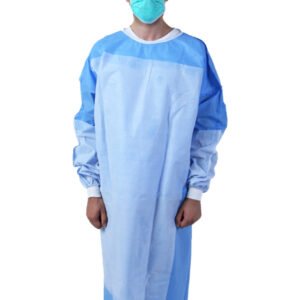
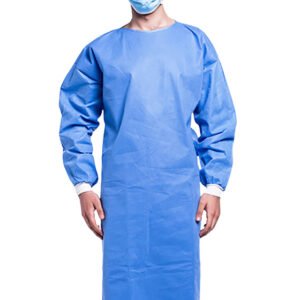
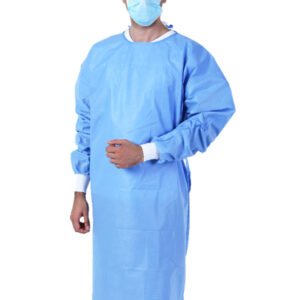
Standard Blue AAMI Level 3 Surgical Gown– Disposable SMS Waterproof Long Sleeve Barrier Gown for Sale
Custom Surgical
Gown Options for Hospitals and Clinics
Custom surgical gowns are developed for hospitals, clinics, and medical centers worldwide. Backed by extensive experience in medical gown manufacturing, the company understands the varied requirements of healthcare professionals across different clinical settings. Each gown is fully customizable, with options for materials, colors, sleeve styles, collars, waistbands, and seam constructions to suit specific surgical procedures. Manufactured to strict quality standards, these gowns offer reliable protection, comfort, and durability, supported by fast turnaround times to meet demanding medical environments.
Color Options for Surgical Gowns
Color plays an important role in operating room visibility, comfort, and focus. The most commonly used surgical gown colors include:
Blue
A standard choice in hospitals, blue disposable surgical gowns create a clean, calm, and professional clinical environment.
Dark Blue
Often selected for a more refined and modern medical appearance, dark blue gowns provide a polished, professional look in surgical settings.
Green
Green gowns help reduce eye strain under bright surgical lighting and enhance visual contrast, allowing surgeons to maintain better focus during procedures.
Customizable Materials for Surgical Gowns
Selecting the right material is critical to ensuring proper protection, comfort, and suitability for different medical procedures. Our custom surgical gowns are available in a variety of materials with weights ranging from 30 g/m² to 60 g/m², enabling hospitals and clinics to achieve the ideal balance between lightweight comfort and effective fluid resistance.
SMS (Spunbond–Meltblown–Spunbond)
Lightweight and breathable, SMS material provides reliable basic protection against fluids and airborne particles. It is well suited for low-risk procedures, outpatient care, and general medical use. Its moderate weight ensures comfort during extended wear while maintaining an effective protective barrier.
SMMS (Spunbond–Meltblown–Meltblown–Spunbond)
Thicker than SMS, SMMS offers enhanced resistance to fluids and microbial penetration. This material is ideal for moderate-risk procedures, such as minor surgeries and examinations where additional protection is required. SMMS gowns deliver an excellent balance of safety, breathability, and wearer comfort.
SMMMS (Spunbond–Meltblown–Meltblown–Meltblown–Spunbond)
Featuring additional meltblown layers, SMMMS provides the highest level of protection against fluids, bacteria, and contaminants. These gowns are designed for high-risk surgical environments, long-duration procedures, and situations where superior barrier performance is essential. The multi-layer construction ensures maximum protection without restricting movement.
Sleeve Styles for Surgical Gowns
Comfort and mobility are critical during long medical procedures. Selecting the appropriate sleeve style for a surgical gown helps ensure healthcare professionals can work efficiently and without restriction.
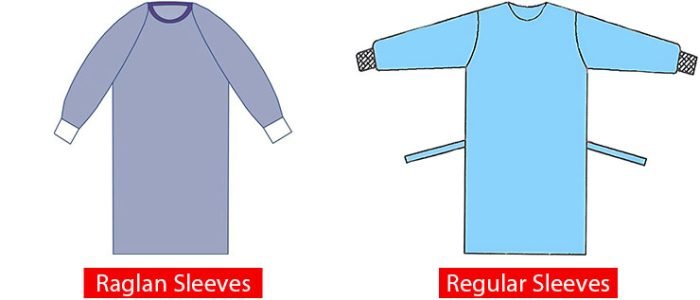
Raglan Sleeves
Featuring diagonal seams that extend from the collar to the underarm, raglan sleeves provide enhanced arm mobility and reduce strain during extended procedures. This design is ideal for surgeries that require frequent movement and flexibility.
Regular Sleeves
With a traditional shoulder seam, regular sleeves offer a classic fit that allows comfortable movement while maintaining dependable coverage. Gowns with regular sleeves are well suited for general use and routine hospital operations.


Collar Options for Surgical Gowns
The collar is an important part of a surgical gown, providing a secure fit and protection during medical procedures. Choosing the right style improves comfort, ease of use, and safety for healthcare staff. Tie-on Collar Adjustable straps ensure a snug, customizable fit. Gowns with tie-on collars allow staff to adjust the fit for long surgeries, reducing gaps that could compromise protection. Velcro Collar Quick fastening and easy removal make Velcro collars convenient for busy surgical teams. Gowns with Velcro collars allow fast dressing and removal while maintaining a secure fit, ideal for emergency procedures.
Waistband Options for Surgical Gowns
The collar is a key component of a surgical gown, ensuring a secure fit and reliable protection during medical procedures. Selecting the appropriate collar style enhances comfort, usability, and safety for healthcare professionals. Tie-On Collar Featuring adjustable ties, this collar style provides a customizable and secure fit. Tie-on collars are ideal for long surgical procedures, as they help minimize gaps and maintain consistent protection throughout extended wear. Velcro Collar Designed for quick fastening and easy removal, Velcro collars offer convenience for fast-paced surgical environments.
Seam Type for Surgical Gowns
The collar is an important part of a surgical gown, providing a secure fit and protection during medical procedures. Choosing the right style improves comfort, ease of use, and safety for healthcare staff. Tie-on Collar Adjustable straps ensure a snug, customizable fit. Gowns with tie-on collars allow staff to adjust the fit for long surgeries, reducing gaps that could compromise protection. Velcro Collar rewrite Quick fastening and easy removal make Velcro collars convenient for busy surgical teams. Gowns with Velcro collars allow fast dressing and removal while maintaining a secure fit, ideal for emergency procedures.
Surgical Gown Factory With Qualified Quality

1. The manufacturer strictly adheres to the ISO 13485 quality management system.
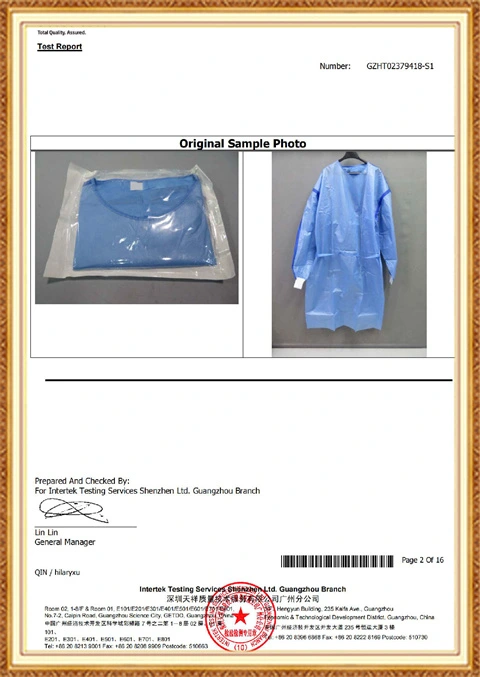
2. All gowns are CE certified and fully comply with the EN 13795 quality standard.

3. Before production, all nonwoven fabrics undergo rigorous quality testing.

4. The production environment is maintained in a clean, orderly manner and complies.

5. The manufacturer strictly adheres to the ISO 13485 quality management system.
FAQs for Bulk Surgical Gown Buyers
What are the types of surgical gowns?
There are two primary types of surgical gowns: disposable and reusable. Disposable gowns are typically made from lightweight nonwoven materials such as SMS and are intended for single use to help minimize the risk of infection. Reusable gowns, on the other hand, are produced from woven polyester or cotton blends and can be laundered and sterilized repeatedly. While both types meet required protection standards, they are suited to different purposes. Hospitals often choose disposable gowns for high-risk procedures, whereas reusable gowns are favoured for their sustainability, long-term cost efficiency, and reduced environmental impact.
How to fold a surgical gown?
Properly folding a surgical gown is essential to maintaining its sterility until use. Begin by holding the gown at the shoulders with the inner surface facing toward you. Carefully fold the sleeves inward so they lie flat. Then fold the gown lengthwise, making sure the sterile outer surface is not exposed or contaminated. Once folded, place the gown into sterile packaging or a designated storage area. Using correct folding techniques helps prevent contamination and ensures the gown remains safe and ready for surgical procedures.
Sterile vs Non-Sterile Surgical Gowns: What’s the Difference?
Sterile surgical gowns are specifically intended for use in operating rooms, where strict aseptic conditions are essential for patient safety. They are individually packaged and sterilized—commonly through gamma radiation or ethylene oxide—prior to distribution. Non-sterile gowns, by contrast, are used for general medical activities outside of surgery, such as examinations or routine patient care. Although both types offer protection against fluids and microorganisms, only sterile gowns are suitable for surgical procedures that require a fully controlled, sterile environment.
Are surgical gowns waterproof?
Surgical gowns are generally fluid-resistant, though they are not always completely waterproof. Disposable gowns made from materials such as SMS or polyethylene-coated fabrics offer a high level of liquid protection and help prevent blood penetration. Reusable gowns, in contrast, often rely on water-repellent finishes and require proper laundering and sterilization after each use. For procedures with heavy fluid exposure, reinforced or fully waterproof gowns are recommended. Choosing the appropriate gown depends on the procedure’s risk level, hospital safety policies, and the degree of protection needed during surgery.
What is the cost of surgical gowns?
Sterile surgical gowns are specifically intended for use in operating rooms, where strict aseptic conditions are essential for patient safety. They are individually packaged and sterilized—commonly through gamma radiation or ethylene oxide—prior to distribution. Non-sterile gowns, by contrast, are used for general medical activities outside of surgery, such as examinations or routine patient care. Although both types offer protection against fluids and microorganisms, only sterile gowns are suitable for surgical procedures that require a fully controlled, sterile environment.
How long can you wear a surgical gown?
A surgical gown should be used for only one procedure to prevent contamination. Disposable gowns must be discarded immediately after use, while reusable gowns should be properly sterilized before being worn again. Even if a gown appears clean, it may still harbor microorganisms. Although the duration of use can vary depending on factors such as fluid exposure and the length of the surgery, standard guidelines recommend changing gowns after every operation to maintain strict infection control and ensure the safety of both patients and healthcare staff.
How do you put on a surgical gown?
To don a disposable surgical gown, start by thoroughly washing your hands and putting on sterile gloves if required. Handle the gown by the inside only, taking care not to touch the sterile outer surface. Slide your arms completely into the sleeves, then have an assistant fasten the gown securely at the neck and waist. This technique helps maintain sterility of the gown’s front. Proper gowning procedures are vital for preventing infection and protecting both healthcare personnel and patients during surgery.
How do you remove a surgical gown safely?
To remove a disposable surgical gown, start by unfastening the waist and neck ties without touching the front of the gown. Carefully pull the gown away from your body, turning it inside out as you remove it to trap any contaminants. Dispose of single-use gowns in designated medical waste containers, and send reusable gowns for appropriate sterilization. Proper gown removal, or doffing, is essential to prevent exposure to fluids or microorganisms and to uphold strict infection control standards.
Do all surgeries require surgical gowns?
Nearly all surgical procedures require the use of disposable surgical gowns to maintain infection control, regardless of the procedure’s size or complexity. These gowns act as a barrier against fluids and microorganisms, protecting both patients and healthcare professionals. In some minor outpatient procedures, isolation gowns may be used instead. However, within operating rooms, sterile surgical gowns are mandatory and considered essential protective equipment. Their use ensures compliance with strict medical standards and helps reduce the risk of surgical site infections.
How should surgical gowns be stored?
Surgical gowns should be stored in a clean, dry area away from moisture and direct sunlight to maintain their sterility. They must remain sealed in their original packaging until they are ready for use to prevent contamination. Storage shelves should be elevated off the floor and kept in a controlled environment that complies with hospital infection control policies. Proper storage ensures that gowns remain sterile, dependable, and readily available for surgical and medical procedures.
FAQs for Bulk Surgical Gown Buyers
What are the types of surgical gowns?
There are two primary types of surgical gowns: disposable and reusable. Disposable gowns are typically made from lightweight nonwoven materials such as SMS and are intended for single use to help minimize the risk of infection. Reusable gowns, on the other hand, are produced from woven polyester or cotton blends and can be laundered and sterilized repeatedly. While both types meet required protection standards, they are suited to different purposes. Hospitals often choose disposable gowns for high-risk procedures, whereas reusable gowns are favoured for their sustainability, long-term cost efficiency, and reduced environmental impact.
How to fold a surgical gown?
Properly folding a surgical gown is essential to maintaining its sterility until use. Begin by holding the gown at the shoulders with the inner surface facing toward you. Carefully fold the sleeves inward so they lie flat. Then fold the gown lengthwise, making sure the sterile outer surface is not exposed or contaminated. Once folded, place the gown into sterile packaging or a designated storage area. Using correct folding techniques helps prevent contamination and ensures the gown remains safe and ready for surgical procedures.
Sterile vs Non-Sterile Surgical Gowns: What’s the Difference?
Sterile surgical gowns are specifically intended for use in operating rooms, where strict aseptic conditions are essential for patient safety. They are individually packaged and sterilized—commonly through gamma radiation or ethylene oxide—prior to distribution. Non-sterile gowns, by contrast, are used for general medical activities outside of surgery, such as examinations or routine patient care. Although both types offer protection against fluids and microorganisms, only sterile gowns are suitable for surgical procedures that require a fully controlled, sterile environment.
Are surgical gowns waterproof?
Surgical gowns are generally fluid-resistant, though they are not always completely waterproof. Disposable gowns made from materials such as SMS or polyethylene-coated fabrics offer a high level of liquid protection and help prevent blood penetration. Reusable gowns, in contrast, often rely on water-repellent finishes and require proper laundering and sterilization after each use. For procedures with heavy fluid exposure, reinforced or fully waterproof gowns are recommended. Choosing the appropriate gown depends on the procedure’s risk level, hospital safety policies, and the degree of protection needed during surgery.
What is the cost of surgical gowns?
Sterile surgical gowns are specifically intended for use in operating rooms, where strict aseptic conditions are essential for patient safety. They are individually packaged and sterilized—commonly through gamma radiation or ethylene oxide—prior to distribution. Non-sterile gowns, by contrast, are used for general medical activities outside of surgery, such as examinations or routine patient care. Although both types offer protection against fluids and microorganisms, only sterile gowns are suitable for surgical procedures that require a fully controlled, sterile environment.
How long can you wear a surgical gown?
A surgical gown should be used for only one procedure to prevent contamination. Disposable gowns must be discarded immediately after use, while reusable gowns should be properly sterilized before being worn again. Even if a gown appears clean, it may still harbor microorganisms. Although the duration of use can vary depending on factors such as fluid exposure and the length of the surgery, standard guidelines recommend changing gowns after every operation to maintain strict infection control and ensure the safety of both patients and healthcare staff.
How do you put on a surgical gown?
To don a disposable surgical gown, start by thoroughly washing your hands and putting on sterile gloves if required. Handle the gown by the inside only, taking care not to touch the sterile outer surface. Slide your arms completely into the sleeves, then have an assistant fasten the gown securely at the neck and waist. This technique helps maintain sterility of the gown’s front. Proper gowning procedures are vital for preventing infection and protecting both healthcare personnel and patients during surgery.
How do you remove a surgical gown safely?
To remove a disposable surgical gown, start by unfastening the waist and neck ties without touching the front of the gown. Carefully pull the gown away from your body, turning it inside out as you remove it to trap any contaminants. Dispose of single-use gowns in designated medical waste containers, and send reusable gowns for appropriate sterilization. Proper gown removal, or doffing, is essential to prevent exposure to fluids or microorganisms and to uphold strict infection control standards.
Do all surgeries require surgical gowns?
Nearly all surgical procedures require the use of disposable surgical gowns to maintain infection control, regardless of the procedure’s size or complexity. These gowns act as a barrier against fluids and microorganisms, protecting both patients and healthcare professionals. In some minor outpatient procedures, isolation gowns may be used instead. However, within operating rooms, sterile surgical gowns are mandatory and considered essential protective equipment. Their use ensures compliance with strict medical standards and helps reduce the risk of surgical site infections.
How should surgical gowns be stored?
Surgical gowns should be stored in a clean, dry area away from moisture and direct sunlight to maintain their sterility. They must remain sealed in their original packaging until they are ready for use to prevent contamination. Storage shelves should be elevated off the floor and kept in a controlled environment that complies with hospital infection control policies. Proper storage ensures that gowns remain sterile, dependable, and readily available for surgical and medical procedures.